Following the introductory session on November 9, which featured the presentation of the educational program and the faculty by Christian Racca, Laura Pippinato, and Stefania Delprete for TOP-IX, alongside partners from ISI Foundation and Moxoff, today marked the first theoretical and practical lesson of the course. The program is specifically tailored for organizations operating in International Cooperation looking to deepen their understanding of how data science and civic technologies can generate social impact and a competitive advantage within their respective projects.
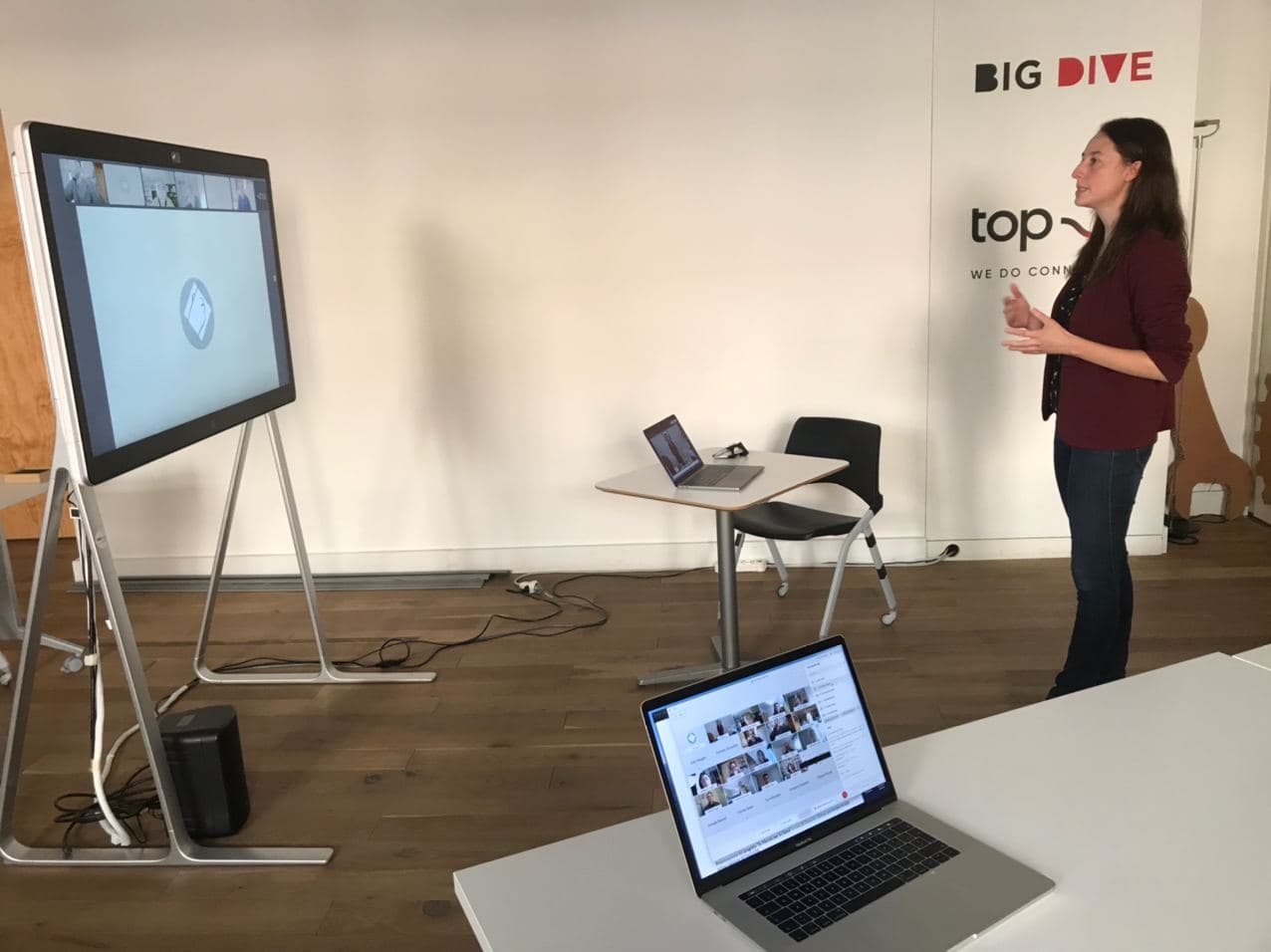
Leading today’s session was Jacopo Rossini from Moxoff, co-organizer of CorDATA alongside TOP-IX (lead partner) and ISI Foundation. He guided participants through using data to analyze donations for non-profit organizations, aiming to improve and maximize “donor care” strategies and campaigns.
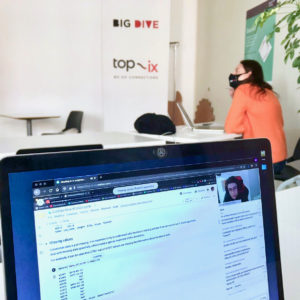
As per good habit, and in continuity with the first edition, the training approach was fully hands-on. For many participants, today represented their very first contact with the Python programming language and Google Colaboratory Notebooks. Although the ultimate goal of CorDATA is not strictly to train Data Scientists or Analysts, getting first-hand experience with a programmatic approach and understanding the logic behind predictive algorithms in a data-driven project is, in our view, of fundamental importance. This foundation allows participants to better understand how to prepare and leverage the data at their disposal, and above all, enables seamless dialogue with technical professionals in the sector.
Starting from the next session on December 14, we will introduce the first case study, featuring the experience of Mission Bambini. Alongside the theoretical lessons, we will launch a personalized mentoring path for the final projects of each participating organization. This path will see our team of tutors and mentors (composed of Christian Racca, Laura Pippinato and Stefania Delprete for TOP-IX, Daniela Paolotti and Michele Tizzoni for ISI Foundation, and Ilaria Speranza along with Jacopo Rossini for Moxoff) working closely with the attendees.
The CorDATA class is made up of 29 participants, largely stemming from the NGO sector (55%), followed by Foundations and Research Centers (18%), Associations (10%), and students or freelancers (17%). While 69% of the participants are based in Italy, the remaining portion primarily operates abroad.
In tal senso la classe di CorDATA si compone di 29 elementi in buona parte afferenti al mondo delle ONG (55%) ed in misura inferiore provenienti da Fondazioni e Centri di Ricerca (18%), associazioni (10%) piuttosto che studenti e freelance (17%).
Il 69% dei partecipanti hanno base in Italia, mentre la restante porzione svolge attività in prevalenza all’estero.
Lessons are held fully online, fitting for this specific historical moment and health situation. However, this has proven to be a key strength, allowing participants to attend remotely, access recordings, and engage in real-time discussions via a parallel communication channel dedicated to the virtual classroom.
Le lezioni si svolgono in modalità completamente online, come si addice al particolare momento storico e alla situazione sanitaria, ma di fatto ciò rappresenta un punto di forza per i partecipanti che possono seguire da remoto, accedere alle registrazioni e confrontarsi online sul canale di comunicazione parallelo alla classe virtuale.
CorDATA è un’iniziativa sostenuta da Fondazione Cariplo e Fondazione Compagnia di San Paolo nell’ambito del programma: Innovazione per lo Sviluppo.